
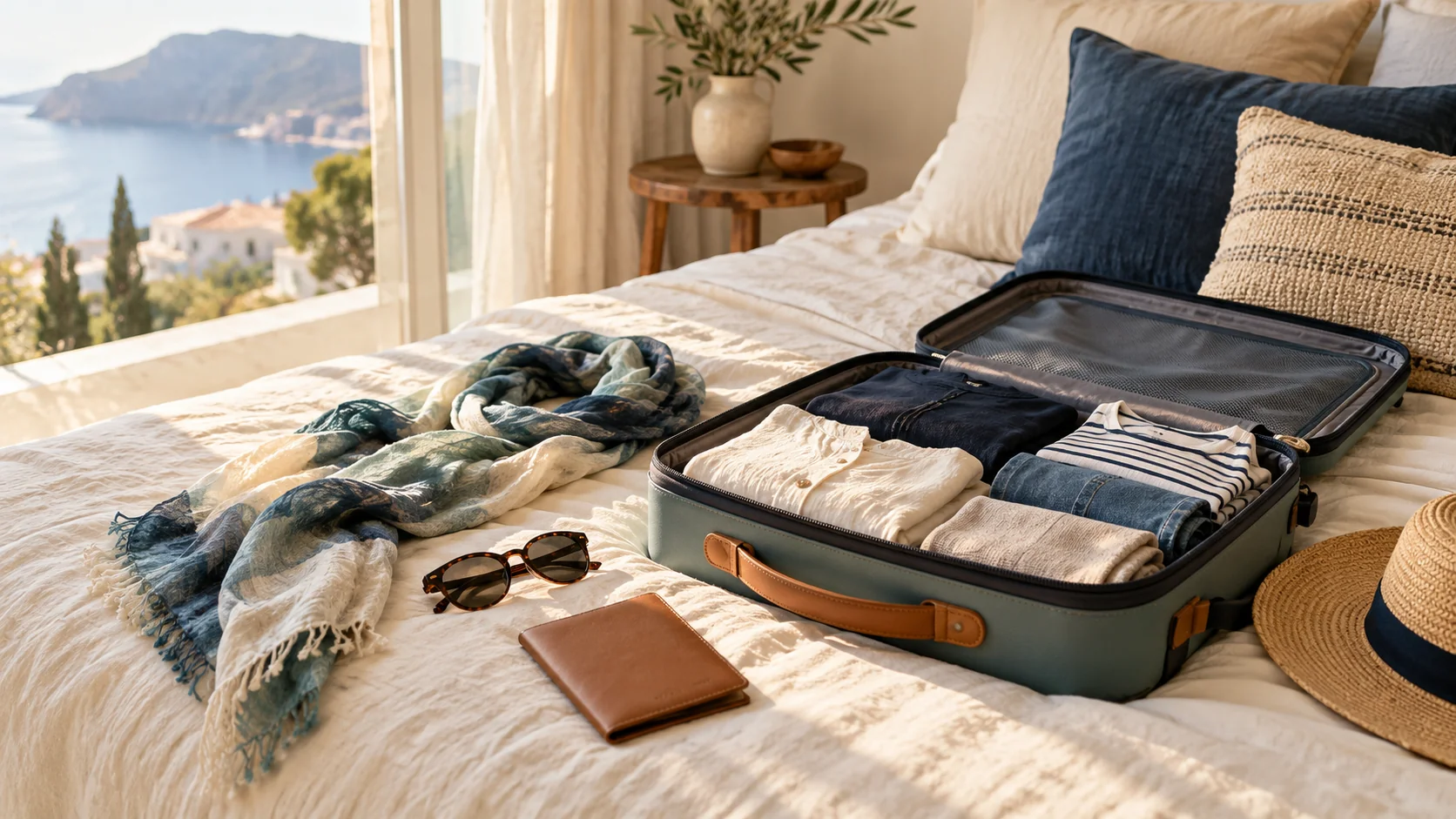
The hidden reason a small bag feels difficult
A small bag is rarely the real problem. The harder part is trying to pack for every possible version of the trip at once: the relaxed morning, the unexpectedly formal dinner, the change in weather, the spontaneous detour. When every possibility receives its own outfit and backup, a short escape begins to look like a relocation.
Packing light works best when you stop treating the bag as a test of discipline. It is an exercise in choosing what matters. The goal is not the smallest possible collection of possessions. It is a bag that lets you move easily while still feeling like yourself when you arrive.
That distinction is particularly useful for a three-to-seven-day getaway. A beach long weekend and a city break can be the same length and need very different things. Start with the shape of the days, then decide what deserves space.
Begin with your actual days
Before making a clothing list, sketch the trip in broad scenes. How much time will be spent in transit? Will most days be outdoors, by a pool, at museums or over long meals? Is there a particular occasion for which you want to feel dressed up? You do not need a minute-by-minute itinerary. You need enough context to recognize which pieces will work hard and which are merely reassuring to bring.
Think in terms of your most repeated day. If you will walk for hours, the shoes you have already worn comfortably matter more than an aspirational pair. If your evenings are informal, a versatile layer may do more for you than a separate look for each dinner. If one special event is central to the trip, give that event proper attention instead of squeezing it into an afterthought.
A useful question for each item is: where, specifically, will I use this? If the answer is only 'just in case,' consider whether it earns its place. There are legitimate contingencies, of course. The point is to notice when contingencies have quietly become the whole suitcase.
Choose combinations, not isolated outfits
A compact wardrobe becomes easier when its pieces have relationships. Choose a small group of colors that feels natural to you, then select garments that can be combined in more than one way. A shirt that works with both your daytime trousers and an evening layer has more value than a beautiful piece that needs its own shoes and accessories.
This is not a requirement to dress in neutrals or to abandon personality. A vivid scarf, a favorite piece of jewelry or a patterned top can carry a great deal of character. The question is whether each choice supports the rest of the bag. Style should survive the editing process.
Lay out the combinations rather than counting garments in isolation. Seeing them together reveals duplication quickly. Two pieces may fill the same role; another may unlock several looks. You can often remove something without losing a single occasion you actually planned for.
Respect the unglamorous essentials
A considered bag still needs room for the less photogenic parts of travel: personal medication, identification, chargers, any essential documents and the items you would miss immediately if a checked bag were delayed. The right selection depends on your route and your circumstances. Check the airline's current carry-on and personal-item dimensions, liquid rules and baggage terms for your specific ticket; policies vary and can change.
Comfort is also an essential. If a fabric never feels good after a full day, it will not become more comfortable on vacation. The same goes for shoes that have not been broken in. When space is limited, familiarity is a strength. An item you trust will usually outperform a speculative purchase made for the fantasy version of a trip.
Leave a little physical room, too. A bag packed to the zipper at home may become frustrating after you have used it for a few days. Space makes it easier to find things, repack calmly and return with the small keepsake you did not plan to buy.
Make the final edit with confidence
Once everything is laid out, do a second pass. Look for pairs of items serving the same purpose. Ask whether a single layer could work across different temperatures and settings. Notice where one change, such as a different shoe or outer layer, would make several outfits possible. Then stop editing when the bag supports the trip you intend to take.
Packing light is not a performance to be graded by the number of items left behind. It is the quiet pleasure of arriving with what you need and knowing why it is there. A little structure before departure can give you more freedom once you are away.
Keep the trip comfortable, not just compact
The best small-bag plan accounts for how the journey will feel. A long layover, an early arrival before check-in or a train connection can make quick access more valuable than maximizing every inch of volume. Put the items you will reach for during transit where you can find them without emptying the bag. A thoughtful arrangement is often as useful as bringing fewer things.
Consider the season and the settings you will actually encounter. A light layer may be essential even when the destination is warm if air conditioning or cool evenings are part of the trip. The answer is not to pack for every imaginable weather event, but to choose a few adaptable pieces and check the forecast close to departure. Outdoor plans deserve a different approach than indoor plans.
If laundry is genuinely available and convenient, it may change what you need for a longer trip. If it would consume time you would rather spend elsewhere, do not build your entire wardrobe around an optimistic plan to wash clothes. A good packing system fits your real preferences, including how much effort you want to spend once the trip begins.
A RESOURCE FROM THE STUDIO
A little structure for the packing part
If you would like to turn those choices into a practical system for a short personal-item trip, Pack Light Freedom brings the wardrobe and preparation decisions together. Review the full format and contents before purchasing.
Explore Pack Light Freedom in the Studio →The Studio product page includes the complete overview and a direct Etsy link. Check the current price, contents, format and language on Etsy before purchasing.