You arrive somewhere beautiful, take out your phone and record the obvious shot.
The skyline. The beach. The hotel pool. The famous building. The plated meal.
Those clips are useful. They are also the reason many travel creators come home with hundreds of attractive videos and still struggle to build a story.
The problem is not that you missed the destination.
You missed the journey between the highlights.
A Reel needs visual sentences, not isolated nouns
Think of the hero shot as a noun: hotel, beach, airport, restaurant, city.
A story needs verbs.
Arriving. Walking. Opening. Looking. Choosing. Waiting. Moving. Discovering. Leaving.
Those actions create continuity because they show how one moment becomes the next.
A wide shot of a hotel exterior tells the viewer where you are. A hand opening the room door tells them the experience is beginning.
Both matter.
Film the transition before the attraction
The easiest footage to forget is often the footage that makes editing easier later.
Before entering a place, capture the approach.
Film the street sign, the turn into the property, the elevator button, the footsteps down the hallway, the ticket being scanned or the first glimpse through the doorway.
Transitions create natural edit points. They also help the audience understand space and sequence without needing a paragraph of text on screen.
Collect details that explain the experience
A detail shot should do more than look pretty.
Ask what the viewer needs to notice.
At a hotel, it might be the workspace, outlet location, shower setup, balcony depth, luggage storage or distance between the bed and a sleeper sofa.
At a destination, it might be the pavement, shade, signage, seating, crowd flow or how far the attraction looks from the transit stop.
Details become valuable when they answer a question.
Show scale with movement
Static clips can make very different places feel visually similar.
Movement helps communicate scale.
Walk through the lobby. Pan from the station entrance to the platform. Film the path from the room to the pool. Capture the distance between two important points instead of only showing both separately.
You are not trying to make every clip cinematic. You are giving the viewer spatial information.
That makes travel content more useful.
Record the decision moments
Some of the strongest travel content happens before the “main” experience.
Which line do you choose? Which street do you take? What do you pack for the day? Which option did you skip? What did you check before leaving the hotel?
These moments are powerful because they reveal process.
They can support educational content later: what you would do differently, what surprised you, what mattered more than expected or what another traveler should know before making the same choice.
Capture reactions without forcing them
Not every reaction needs to be a talking-head review.
A pause at the view, a hand reaching for the room key, a laugh during a transfer, the first look at a meal or the quiet moment after arriving can give the edit emotional texture.
The point is not to manufacture a response for the camera.
It is to remember that travel content is about how the experience unfolds, not only what the destination looks like.
Build a repeatable shot sequence
When you do not know what the final Reel will be yet, use a simple sequence:
arrival → movement → wide shot → detail → interaction → reaction → exit or transition.
You will not need every shot in every edit. That is fine.
The sequence gives you options later, especially when you want to turn one experience into several different pieces of content.
A hotel stay can become a room Reel, a location Reel, an accessibility note, a “what surprised me” video or a destination guide because you filmed more than the bed and the pool.
Film for the edit you have not imagined yet
The creator advantage is not having the most footage.
It is having the right variety of footage.
When the clips include movement, context, details and transitions, you can build stronger stories without trying to rescue the edit with excessive text, stock footage or unrelated B-roll.
The next time you travel, do not only ask, “What is the main shot here?”
Ask, “What will help me connect this moment to the next one?”
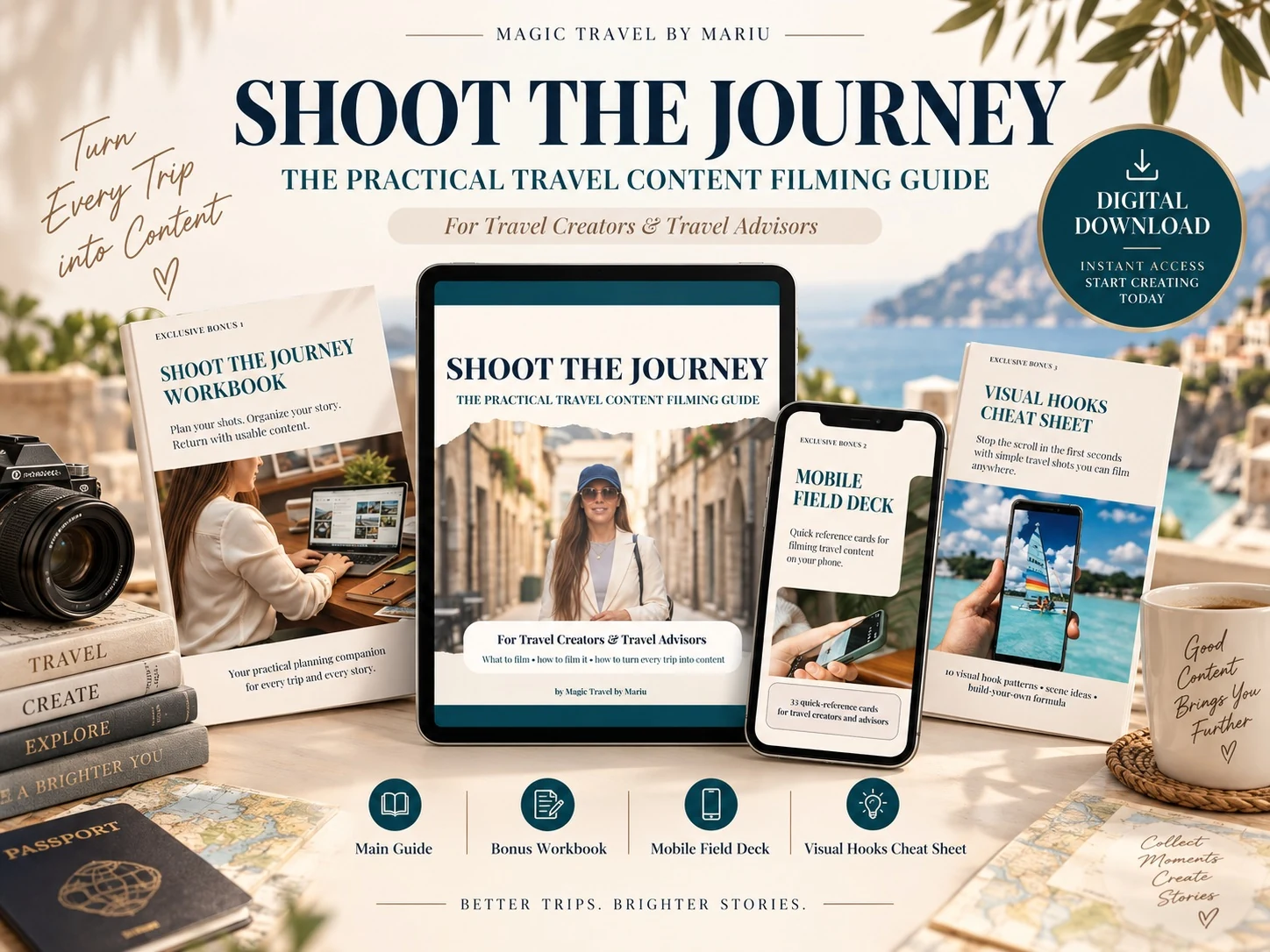
The Shoot the Journey Travel Content Filming Guide is built around that idea: planning travel footage as a sequence so you come home with clips that are easier to turn into useful, story-driven content.