
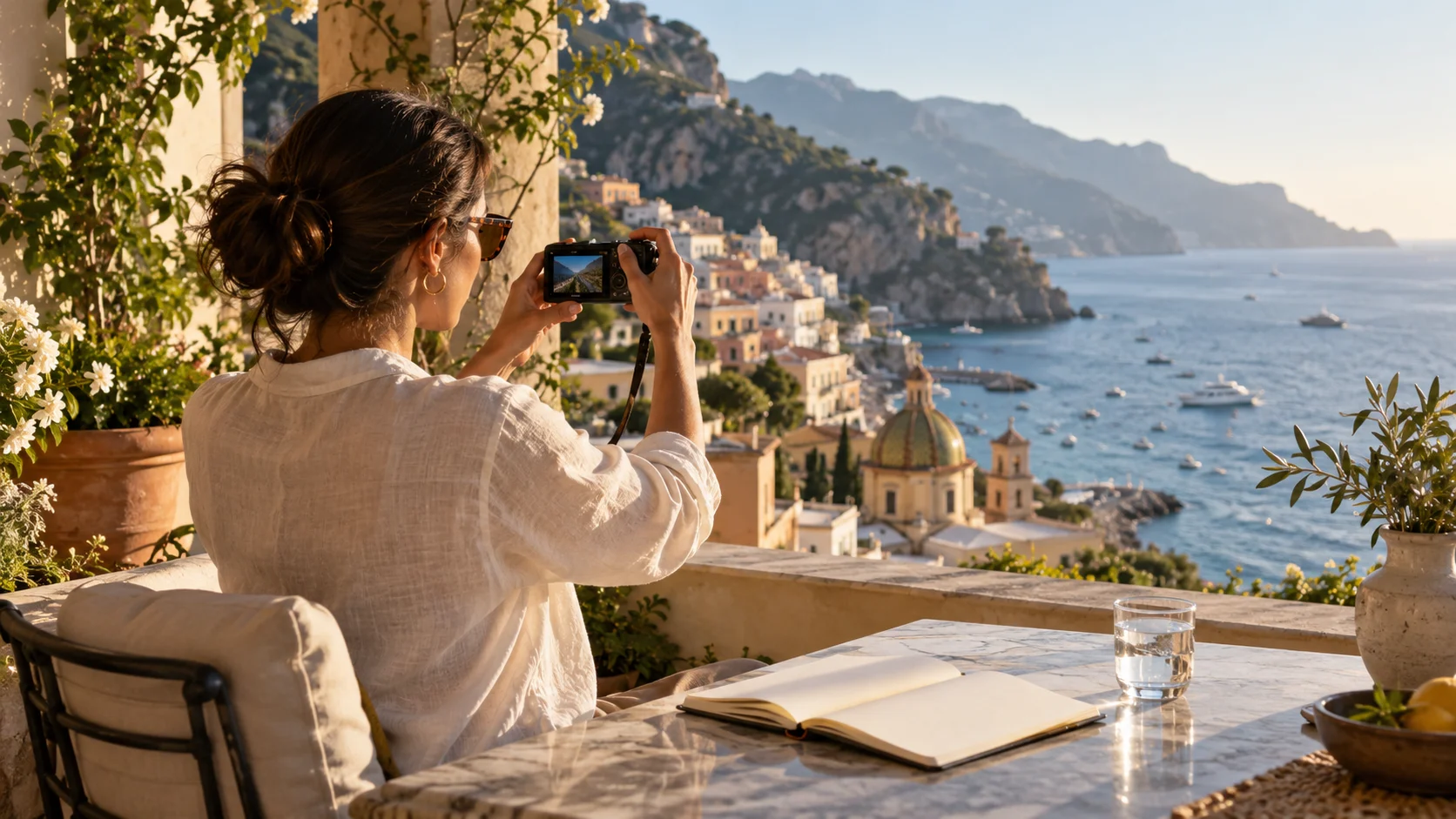
A beautiful destination is not yet a story
A camera roll can be full of remarkable views and still leave you with a difficult edit. There is the arrival, the room, the sea, the dinner, the street at sunset. Each clip is attractive on its own. Together, they may say very little about what made the experience distinctive.
Travel content becomes more compelling when it carries a point of view. Perhaps the destination feels unexpectedly quiet in the early morning. Perhaps the best part of a hotel is the way its spaces invite you to slow down. Perhaps a familiar city reveals itself differently when you explore one neighborhood on foot. The observation is the beginning of the story; the footage gives it shape.
This does not require a rigid script before departure. A loose editorial intention gives you something to notice without turning the trip into a production schedule. It also makes the moments you choose to film more deliberate.
Choose one question before you leave
Rather than asking only what you should film, ask what you hope to understand. What does a slow morning here feel like? How does the property connect to the place around it? What would a first-time visitor overlook? A question leaves room for discovery. It gives the trip a direction without dictating the answer.
That question can be small. A single walk from your hotel to a café may reveal more about the pace of a neighborhood than a broad montage of attractions. A detail in the lobby, the sound of a market opening or the changing light on a terrace can become meaningful when it supports the same idea.
If you are creating on behalf of a hotel or brand, establish deliverables and usage terms separately from your creative question. Agree on what must be shown, the format, timing, approval process and rights. Creative freedom is easier to exercise when the business expectations are clear.
Film the transitions as well as the highlights
A sequence needs movement. The grand view may be the reward, but the way you arrive there helps an audience feel the journey. An opening door, footsteps through a shaded passage, a hand setting down a coffee or a change from a busy street to a quiet courtyard can give an edit its rhythm.
Look for a few complementary frames: a wide view that establishes place, a closer detail that invites attention and a human-scale moment that shows how the space is experienced. Let each shot hold steady long enough to be useful later. Leave room for ambient sound when it is part of the atmosphere. You do not need to document every angle of every scene.
Think, too, about what happens before and after the moment you initially came to capture. A table being prepared may communicate hospitality more vividly than a perfectly arranged plate. The light fading after an excursion may reveal the emotional tempo of a day. These are often the connecting scenes that make a piece feel lived rather than assembled.
Keep the experience bigger than the assignment
There is a cost to filming every promising moment. If you are continually searching for the next shot, the place can become a set of assets rather than an experience. Decide in advance when you will give a location your full attention, when you will take a few purposeful clips and when you will put the device away.
A short capture window can be more productive than a whole day spent half-filming. Take in the setting first. Notice what genuinely holds your interest. Then return to make a few considered frames if conditions allow. In places where returning is difficult, a compact mental list of essential scenes can help you film efficiently and continue with the day.
Respect the people and spaces around you. Ask permission where appropriate; follow property rules; be thoughtful about filming staff, guests and children. A polished story does not need to intrude on someone else's experience. Presence and professionalism can coexist.
Edit toward a feeling you can name
Before opening the editing timeline, write one sentence about the piece you want to make. Not 'a video about my trip,' but something closer to 'the city feels most generous before it gets busy' or 'this stay makes room for a slower kind of luxury.' The sentence is a decision tool. It helps you choose what belongs and release footage that is beautiful but unrelated.
Build a clear beginning, middle and finish. An opening image can raise a question or establish an atmosphere; the middle adds texture or a shift in perspective; the ending gives the viewer a sense of arrival. The sequence need not be dramatic. A quiet editorial arc can be far more memorable than a rapid inventory of amenities.
Choose captions and music that support the real experience, rather than covering its absence. If a claim depends on a current service, access condition or feature, verify it before publication. If the stay involved a collaboration, disclose that relationship clearly. Trust is part of the work, especially when content may shape someone else's travel decisions.
Create a repeatable practice, not a perfect trip
After the journey, review what helped. Which question produced the most useful scenes? Where did you wish you had a transition or a little more natural sound? Which moments felt better left unfilmed? These observations become a practical brief for the next trip.
Keep your notes small enough to use. A few story angles, a handful of scenes to watch for and the deliverables that truly matter can provide structure without overwhelming the journey. Travel will still surprise you. The purpose of preparation is to recognize the story when it appears, not to control it in advance.
The best travel content can invite viewers into a place while reminding its creator why the place mattered. Film with intention, then allow yourself to be there.
A RESOURCE FROM THE STUDIO
Give your next filming day a little direction
Shoot the Journey offers a practical filming guide, workbook and mobile field deck for shaping travel scenes with purpose. Explore the resource in Studio to see its format and contents.
Explore Shoot the Journey in the Studio →The Studio product page includes the complete overview and a direct Etsy link. Check the current price, contents, format and language on Etsy before purchasing.